Gold Prices Firm: Fed Cues, Inflation Data Drive Market
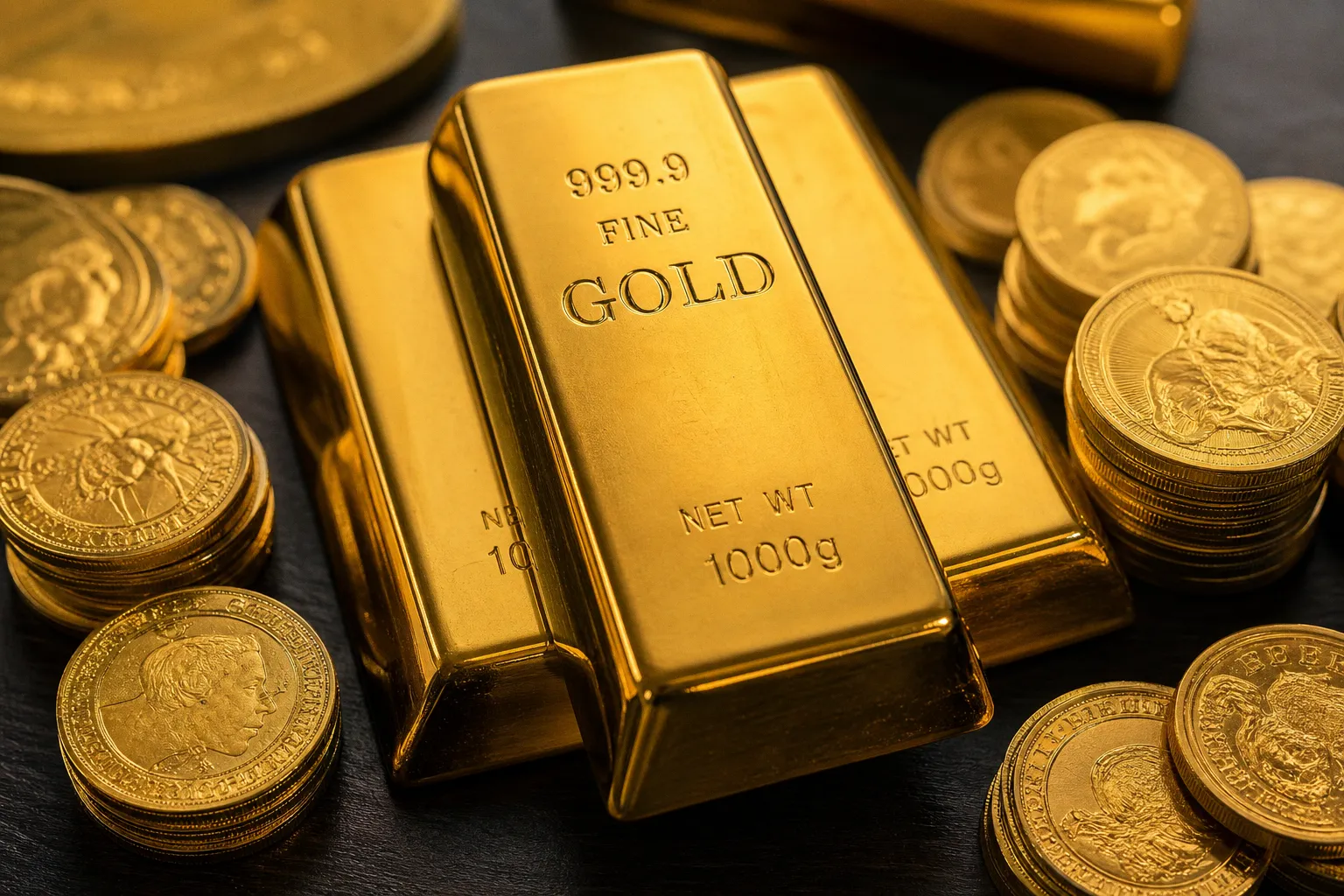
Gold holds its ground as traders recalibrate around two converging signals: the upcoming FOMC meeting minutes and a batch of inflation readings, including China's CPI data.
The Fed Signal — and a Curious Reframe
Wall Street's rate-cut obsession is getting a reality check. Kevin Warsh, a former Fed governor, publicly urged traders to stop parsing every Fed utterance for dovish hints and focus instead on incoming economic data. That's a significant rhetorical shift for a market conditioned to front-run central-bank guidance.
The FOMC minutes, expected this week, will test whether that reframe sticks. If the minutes reveal a committee more hawkish than consensus expects, gold could face short-term headwinds. If they confirm a data-dependent pause, the metal's current firmness likely holds — because the market already prices in "wait and see."
For gold bulls, the Warsh commentary is quietly bullish: it suggests rate-setters themselves are uncomfortable being the market's primary signal, which keeps policy uncertainty elevated. Uncertainty, historically, is gold's native habitat.
Inflation Data: The Next Hurdle
China's inflation print lands alongside the FOMC minutes, creating a compressed window for price discovery. Chinese CPI has been running soft — the question is whether a deflationary impulse from the world's second-largest economy pushes global bond yields lower, which would support gold, or signals deeper demand weakness that drags commodities broadly.
The interplay matters more than either print in isolation:
- Bullish for gold: softer Chinese inflation → lower global yields → reduced opportunity cost for holding non-yielding assets.
- Bearish for gold: softer Chinese inflation reflecting collapsing demand → risk-off liquidation → gold sells with everything else as investors raise cash.
Without the full data, the directional bet remains a coin flip — but the setup is asymmetric. Gold has been firming into this macro cluster, suggesting positioning already leans constructive.
What This Means for Portfolio Construction
Gold's current posture — stable-to-firm amid mixed macro signals — reinforces its role as a diversifier rather than a growth engine. For women building long-term wealth, the relevant question isn't "where will gold be next week?" but "what job is gold doing in my allocation?"
Three points to anchor on:
- Allocation, not timing. Gold's value as a portfolio hedge is structural. A 5–10% allocation — the range most institutional strategists recommend — doesn't require a macro thesis every quarter. It requires discipline.
- Real yields are the key variable. When inflation-adjusted returns on cash and bonds compress, gold competes more effectively. Watch the 10-year TIPS yield, not just headline CPI headlines.
- No income, no problem — but size accordingly. Gold pays no dividend. Its payoff comes from capital appreciation and crisis alpha. That's a legitimate return stream, but it demands you size the position so you're never forced to sell during a drawdown to fund other needs.
The macro calendar this week — FOMC minutes, China CPI, corporate earnings — will create noise. Gold's firmness suggests the market is already voting on the outcome. The risk isn't the data itself; it's overreacting to a single print in either direction.
Bottom line: Gold is holding because the macro setup supports it — policy uncertainty is elevated, real yields are contained, and no single data point this week is likely to break the trend. Maintain your allocation. Adjust only if the underlying thesis — that fiat-debasement and fiscal excess remain the dominant regime — materially changes. So far, it hasn't.